How Smart Rings Are Changing the Way Women Approach Daily Health Monitoring
For a long time, health tracking was dominated by bulky wristbands and smartwatches that demanded constant attention — buzzing with notifications, requiring nightly charging, and clashing with professional or formal attire. Women, in particular, often found these devices impractical for everyday wear. But wearable technology has quietly matured into something far more refined, and the smart ring is at the forefront of that evolution. Lightweight, discreet, and packed with sophisticated sensors, today's smart rings are giving women a genuinely new way to engage with their own health data — one that fits naturally into daily life rather than interrupting it.
The shift isn't just about aesthetics or convenience, though both matter. It's about a deeper change in how people — and women specifically — are beginning to think about wellness. Rather than focusing purely on output metrics like step counts or calories burned, a growing number of health-conscious individuals are turning their attention inward, toward the internal signals that actually determine how the body is functioning at any given moment. Heart rate variability, blood oxygen saturation, resting heart rate trends, sleep architecture, stress load — these are the data points that paint a real picture of physiological health, and they require continuous, passive monitoring to be meaningful. Smart rings are designed exactly for that purpose.
Why Women Are Seeking More From Their Wearables
Women's health exists on a spectrum of biological complexity that most wearable devices have historically underserved. Hormonal fluctuations across the menstrual cycle, pregnancy, and menopause don't just affect mood — they directly influence sleep quality, cardiovascular patterns, metabolic rate, and stress response. For years, fitness trackers treated these variables as invisible, offering the same one-size-fits-all readouts to every user regardless of gender or hormonal context. That approach left a significant gap in what wearables could actually deliver for women who wanted to understand their bodies in a more complete way.
That gap is beginning to close. Modern smart rings now incorporate features specifically designed around female physiology, including cycle tracking, ovulation window detection, and hormonal pattern recognition. These capabilities don't just add new data points — they recontextualize all the other data the ring is already collecting. When a woman's resting heart rate rises slightly in the days before menstruation, that's not an anomaly to be concerned about. It's a recognized physiological pattern. A smart ring with the right software can flag that context automatically, helping the wearer interpret their data more accurately and make better-informed decisions about training, rest, and recovery.
Beyond reproductive health, women are also driving a broader cultural shift away from performance-at-all-costs fitness culture toward something more sustainable and self-aware. Rest, recovery, and stress management are no longer seen as signs of weakness — they are recognized as essential components of long-term health. The data coming from smart rings reinforces this understanding in concrete, measurable terms, giving women the evidence they need to prioritize rest without guilt and to recognize when their bodies are genuinely ready to push harder.
Understanding the Core Health Metrics That Matter Most
One of the reasons smart rings have gained traction among health-conscious women is the quality and depth of the metrics they track. Unlike surface-level step counters, these devices use photoplethysmography (PPG) sensors, accelerometers, and temperature sensors to continuously monitor a range of physiological signals throughout both day and night. The result is a comprehensive dataset that builds into meaningful patterns over time.
Heart rate variability, or HRV, is one of the most clinically significant metrics a smart ring can monitor. HRV measures the variation in time between consecutive heartbeats — a value that increases when the body is well-rested, properly recovered, and not under significant stress, and decreases when the opposite is true. For women who are balancing demanding work schedules, physical training, family responsibilities, and the biological demands of their menstrual cycle, HRV offers an objective, real-time window into how the nervous system is coping. It's a metric that doesn't lie: even when someone feels fine subjectively, a low HRV reading can indicate that the body is not ready for high-intensity activity.
Sleep quality is another area where smart rings have proven particularly valuable. Total sleep time is only part of the picture. What matters as much — perhaps more — is the distribution of sleep stages: how much time is spent in light sleep versus deep sleep versus REM sleep, and how consistent those patterns are across nights. Poor sleep architecture is associated with impaired cognitive function, hormonal dysregulation, weakened immune response, and reduced athletic recovery. A smart ring worn overnight captures this data automatically, without requiring the user to strap anything uncomfortable around their wrist or chest.
This kind of passive, continuous monitoring aligns closely with what athletes and coaches have been advocating for years. As explored in depth through research on endurance training, tracking recovery rather than just mileage gives a far clearer picture of whether an athlete is adapting positively to training load or accumulating the kind of fatigue that leads to injury and burnout. You can read more about this growing approach to recovery-first training and the specific metrics that matter most in this detailed overview of cudis smart ring for women benefits — a perspective that applies just as much to everyday women managing health as it does to competitive runners.
The Design Advantage: Why Form Factor Matters for Women
A meaningful percentage of women who have tried fitness trackers in the past have abandoned them not because the data wasn't useful, but because the device itself was too cumbersome to wear consistently. A tracker that gets removed before important meetings, left on the nightstand during social events, or taken off because it clashes with a dress is a tracker that isn't collecting the data it needs to be accurate. Consistency is everything when it comes to biometric monitoring, and that means the device has to be something the wearer genuinely wants to keep on at all times.
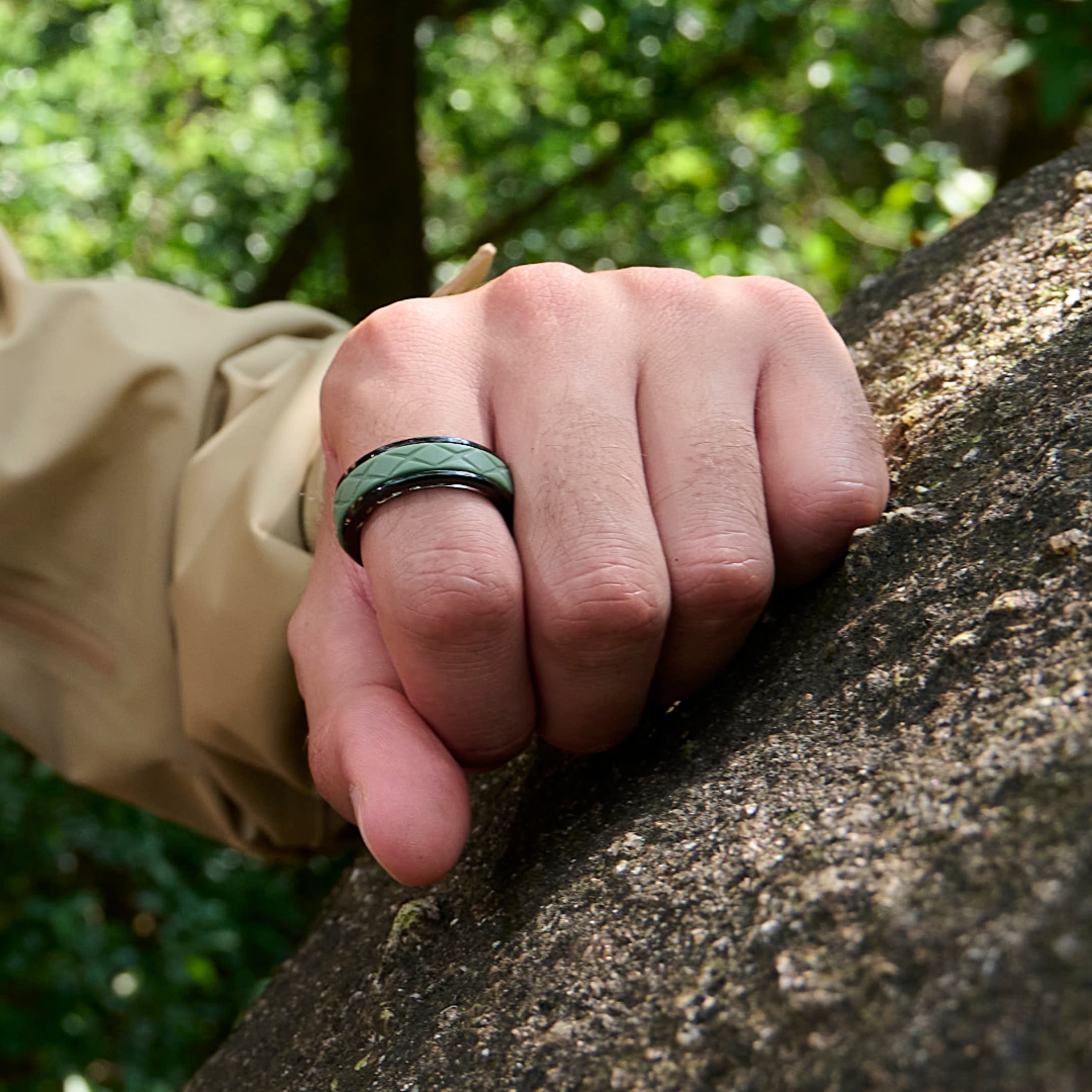
Smart rings solve this problem elegantly. They're typically made from high-grade titanium, meaning they're lightweight, hypoallergenic, and exceptionally durable. They're waterproof to a depth that makes them safe to wear while swimming, showering, or washing dishes. Their profile is slim enough to wear comfortably under gloves or alongside other rings. And their design is neutral enough to complement a wide range of personal styles — from athletic to formal — without drawing unnecessary attention. For many women, this translates into the first wearable health device they've actually worn every single day without thinking about it.
The battery life of premium smart rings — often extending to seven to ten days on a single charge — further reduces the friction of consistent use. There's no need to remember to charge every night or ration usage to make it through the day. The ring simply continues working in the background, gathering data, and syncing to its companion app when the user chooses to review their health insights.
How AI Coaching Transforms Raw Data Into Actionable Guidance
Data alone doesn't change behavior. What transforms health data into meaningful improvements is context, interpretation, and personalized guidance — and that's where AI-powered coaching within smart ring ecosystems becomes genuinely powerful. Rather than presenting a dashboard of numbers and leaving the user to draw their own conclusions, the best smart ring platforms use machine learning algorithms to synthesize multiple streams of biometric data into coherent, actionable recommendations.
A woman who consistently scores low on her sleep quality metric might receive guidance that correlates her data with known influencing factors — late evening screen exposure, elevated stress levels measured earlier in the day, or elevated resting heart rate consistent with an upcoming hormonal phase. Rather than simply telling her she slept poorly, the AI coach can surface patterns across her entire dataset and suggest targeted interventions: adjusting sleep timing, incorporating a brief evening wind-down routine, or scaling back training intensity for a few days to allow the nervous system to recover.
This kind of personalized, data-driven guidance has traditionally been the domain of professional coaches and medical practitioners — inaccessible to most people due to cost and availability. Smart rings are democratizing access to that level of insight, making it available to any woman who wants to engage with her health in a more informed way. Over time, as the ring builds a richer picture of the user's individual baseline and seasonal patterns, the guidance becomes increasingly accurate and specific to that person's unique physiology.
A Practical Look at Key Features Compared
| Feature | Traditional Fitness Band | Smartwatch | Smart Ring |
|---|---|---|---|
| Sleep Stage Tracking | Basic / Limited | Moderate | Advanced (24/7) |
| HRV Monitoring | Rarely available | Some models | Continuous |
| Women's Health Tracking | Basic cycle logging | Limited | Integrated cycle + hormonal insight |
| Comfort for All-Day Wear | Moderate | Low (bulky) | High |
| Battery Life | 1–3 days | 1–2 days | 7–10 days |
| Style Versatility | Sporty only | Sporty / casual | Formal, casual, athletic |
| AI-Powered Coaching | No | Some models | Yes (advanced models) |
What to Look for When Choosing a Smart Ring
The smart ring market has grown considerably over the past few years, and not all devices are created equal. For women who want to use a smart ring as a serious health monitoring tool rather than a novelty accessory, there are several criteria worth evaluating carefully before making a purchase decision.
Sensor quality and accuracy should be the first consideration. A smart ring is only as useful as the reliability of the data it produces. Devices that use high-quality PPG sensors with multiple wavelengths will generally deliver more accurate blood oxygen and heart rate readings than lower-cost alternatives. Independent reviews and comparison testing are valuable resources for assessing sensor accuracy across models before committing to a purchase.
Software ecosystem depth matters equally as much as hardware quality. A ring with excellent sensors but a poorly designed app provides a frustrating user experience and limits the actionability of the data being collected. The best smart ring platforms offer intuitive data visualization, trend analysis over extended time periods, personalized AI-driven recommendations, and integration with other health apps the user may already rely on. Regular software updates that introduce new features and refine existing algorithms are also a sign of a healthy, ongoing investment by the manufacturer in the product's long-term value.
Privacy and data ownership policies deserve careful scrutiny as well. Health data is among the most sensitive personal information that exists, and women should feel confident that their biometric information is being handled responsibly. Understanding how a company stores, uses, and protects health data — and whether it is shared with third parties — is an essential step in the evaluation process.
Integrating Smart Ring Insights Into a Holistic Wellness Routine
The most impactful use of a smart ring isn't checking a single day's readout in isolation — it's building a consistent practice of reviewing trends over time and allowing those trends to inform decisions about training, rest, nutrition, and stress management. This requires a shift in mindset from reactive to proactive: instead of waiting until exhaustion, illness, or injury forces a change, smart ring data can signal the need for adjustment before problems develop.
For women who exercise regularly, integrating smart ring data into training decisions can meaningfully improve both performance and long-term physical health. A low recovery score on a given morning isn't a reason to feel guilty about skipping a hard workout — it's useful information that protects the body from overtraining and reduces injury risk. Similarly, a string of high HRV readings and strong sleep scores indicates a window of physiological readiness that's ideal for higher-intensity training. Learning to work with the body's natural cycles, rather than against them, is a principle that applies to athletes and non-athletes alike.
Beyond the physical dimension, the stress monitoring capabilities of smart rings are increasingly valuable for women managing the psychological demands of modern life. Chronic stress is a significant driver of hormonal disruption, poor sleep, cardiovascular risk, and immune dysfunction — all conditions that disproportionately affect women. Having an objective measure of stress load throughout the day creates awareness that is the first step toward managing it more effectively.
If you want to explore how continuous health tracking through wearable technology can support a more sustainable, recovery-centered approach to your wellbeing, Cudis offers one of the most comprehensive smart ring experiences currently available, combining advanced biometric monitoring with AI-powered coaching in a titanium design built for everyday wear.
Video: CUDIS Smart Ring for Women in 2026
https://www.youtube.com/watch?v=joZW1Gu6KEc